How to Stop Sugar Cravings at Night: A Step-by-Step Guide for Midlife
At a Glance: Why Your Brain Asks for Sugar After Dark
Nighttime sugar cravings in midlife are rarely a sign of weak willpower; they are a biological response to shifting brain chemistry and learned habit loops. As dopamine—the "anticipation chemical"—naturally declines after age 40, your brain begins seeking quick hits of pleasure, often resulting in a sudden, "emergency" demand for chocolate after dinner. By implementing tactical pauses, labeling the sensation as a "dopamine dip," and diversifying your "joy spectrum" beyond food, you can retrain your brain and reclaim your evenings.
Do you feel like the master of your food choices all day, only to lose control come nightfall? We’ve all stood in the kitchen wondering why that post-dinner sugar rush feels so irresistible. But rest assured, if you are trying to stop sugar cravings at night, this isn't a battle of willpower. It’s all about understanding your brain’s chemistry and habit loops—and the good news is, they can be retrained.
Unlocking the Science Behind Sugar Cravings
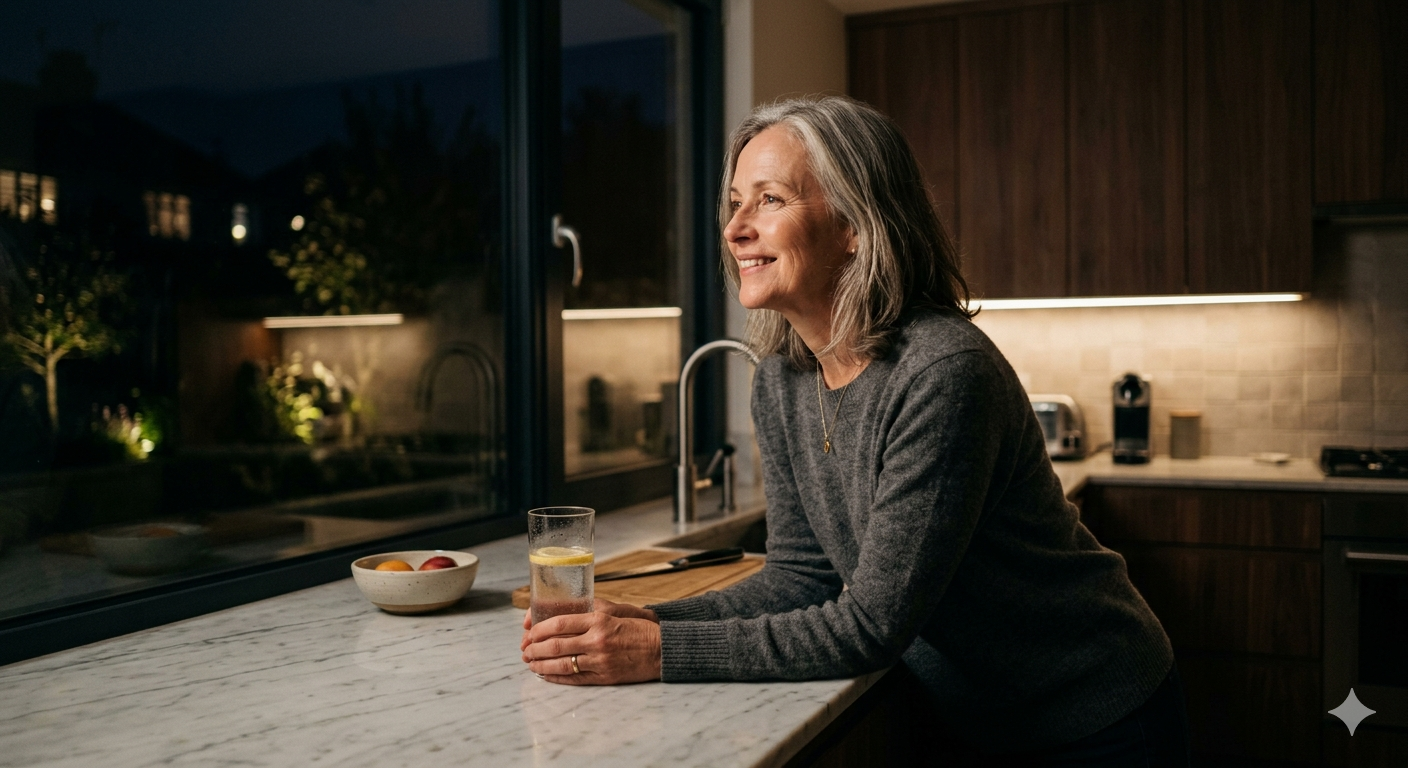
For many of us, chocolate or any sweet treat becomes a nightly ritual. After all, who hasn’t cleaned up after dinner, turned off the kitchen lights, only to hear the seductive call of something sweet? Why does it feel like a sudden emergency?
It turns out, it has everything to do with dopamine, the anticipation chemical that fuels craving cycles. This becomes especially prominent after age 40. As dopamine levels naturally decline, our brains start seeking quick fixes, which cues the "sugar alarm." But the reality is that your brain’s plea for chocolate is like a toddler in the candy aisle at Target: loud and demanding, but not necessarily an order to be obeyed.
Recognizing Patterns to Rewire Cravings
Cravings aren’t catastrophes; they are learned patterns, and like any pattern, they can be changed. Cravings often behave like emotional weather—building, peaking, and then passing—unless they are exacerbated by panic. Commonly, guilt and shame intensify these feelings, creating a cycle that elevates stress and, subsequently, cravings.
To break this cycle, we need awareness. Reflect on that after-dinner moment: what exactly triggered the thought that something sweet would enhance your satisfaction? Recognition is the first step toward change, allowing us to refine our responses instead of reinforcing them. When you see the pattern as biology rather than a character flaw, the power of the craving starts to dissolve.
Tactical Strategies: The 10-Minute Pause
Here is where we get tactical. To effectively stop sugar cravings at night, we can introduce the "10-Minute Pause" rule. When a craving hits, resist the urge to argue with it. Instead, simply set a timer for 10 minutes.
Affirm to yourself: "I absolutely can have this, but I’m choosing to wait." During those ten minutes, engage in a simple task that shifts your physiology: drink a glass of water, brush your teeth, or step outside for a breath of fresh air. Most urges will fade within those 10 minutes, teaching your brain that urgency doesn’t equate to a command.
Labeling your cravings can also be transformative. By identifying them as a "dopamine dip" rather than an "I need chocolate" moment, you’re shifting from emotion to observation. This effectively detaches your identity from the craving and puts you back in the driver's seat.
Planning and Expanding Your Joy Sources
Planned indulgences can also go a long way in managing cravings. If you’re accustomed to impulsive sugar hits, consider scheduling your treats. For instance, choose one night a week where dessert is a given, removing the need for nightly negotiations with yourself. When you remove the "forbidden" aspect, the "emergency" feeling often disappears.
Lastly, consider the role of food in your joy spectrum. If 80% of your daily happiness stems from sugar, your brain will always prioritize it. It’s time for some redistribution. Explore other pleasure sources—connect with friends, delve into a good book, or learn something new. Your brain’s pleasure palette deserves to be as diverse as your meals.

Remember, cravings are merely louder than your plan; they’re not inherently stronger than you. When nighttime beckons with sweet temptation, greet that craving with a smile, embrace the pause, and make an empowered choice. Shift the focus from restriction to agency, and before you know it, your cravings will align more closely with your goals.
Ultimately, you don’t need more discipline; you need a plan that syncs with where you are now. If you're feeling overwhelmed by this alone, a clarity call can help us delve into your specific triggers and develop a sustainable strategy tailored to your life's unique rhythm. Because in the grand scheme of things, chocolate is most certainly not an emergency.
Get new posts delivered to your inbox
Practical wisdom on mindset, hormonal health, and food freedom — straight to you, no noise.